
Objective
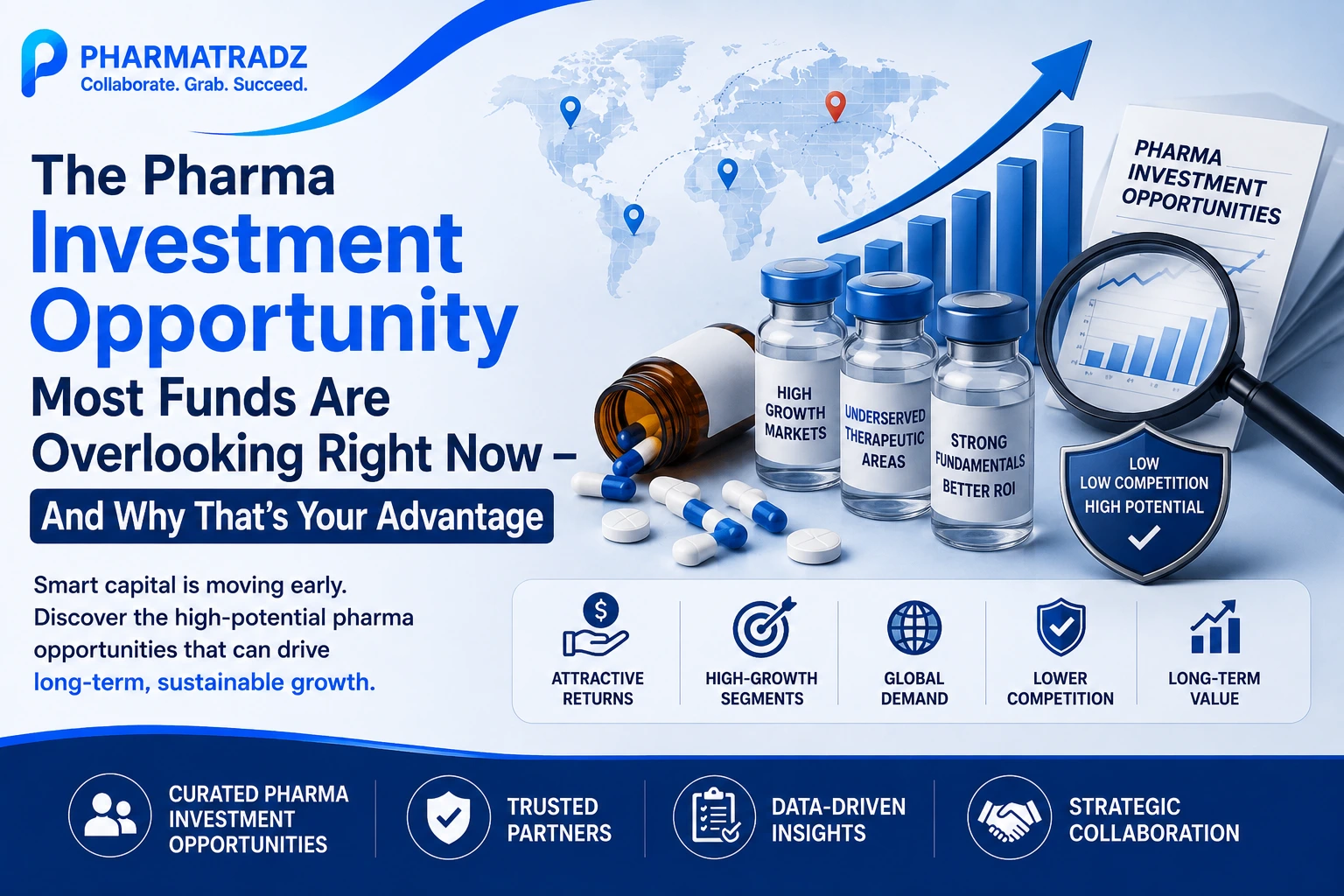
This blog breaks down a real but under-discussed corner of pharma investing. You will understand where the money is actually moving, what is being ignored by large funds, and how to think about this space if you are a serious investor.
Key Takeaways
- Pharmaceutical industry investment trends show a clear move toward specialty drugs, generics in emerging markets, and rare disease treatments.
- Large funds skip mid-market pharma because the deal sizes are too small for them, not because the opportunity is weak.
- What is driving growth in the pharma sector is demographic demand, supply chain restructuring, and the explosion of specialty conditions.
- Investment opportunities in specialty pharmaceuticals are growing faster than the broader pharma market.
- Understanding the business side of pharma, not the science, is what separates good investors from bad ones here.
Table of Contents
- Why Serious Investors Are Looking at Pharma Again
- The Gap Large Funds Cannot Fill.
- What Is Driving Growth in the Pharma Sector
- Investment Opportunities in Specialty Pharmaceuticals
- Emerging Markets Are Being Underpriced
- How to Evaluate a Pharma Company Without a Lab Coat
- Risks That Deserve Honest Attention
- FAQs
1. Why Serious Investors Are Looking at Pharma Again
Pharma has never really left the investment conversation. But the nature of that conversation changed after 2020.
Before the pandemic, most investors focused on drug pipelines, which company was working on the next big molecule, which trial was coming up. It was speculative and science-heavy. A lot of people lost money chasing trial results.
After the pandemic, many investors began paying closer attention to pharma supply chains, distribution networks, and companies that help medicines reach patients reliably. That is a different kind of business. It is more predictable, less glamorous, and frankly more interesting from a returns standpoint.
Pharmaceutical industry investment trends since 2022 show stronger attention on manufacturing resilience, specialty medicines, supply chain reliability, and emerging-market access. These areas are becoming more important as healthcare demand grows and supply chains become more complex.
If you are looking at pharma investment opportunities now, you are entering a period where the fundamentals are strong and institutional overcrowding has not happened yet. That window does not stay open forever.
2. The Gap Large Funds Cannot Fill
Here is a simple reality about large institutional funds. They manage so much capital that small investments are meaningless to them.
A fund with $8 billion under management may avoid a $4 million mid-market pharma investment because the ticket size is too small to meaningfully affect fund performance. Due diligence costs, liquidity limits, and mandate restrictions can also make smaller private deals unattractive for large institutions.
But that same $4 million position can be genuinely significant for a smaller fund, a family office, or a focused sector investor. The company is real. The demand for its products is real. The competition at that level is low because the big players are not even in the room.
As per the research done by Pharmatradz Global Ventures Pvt Ltd, a large portion of value creation in pharmaceutical supply chains is happening in mid-market companies, particularly in Asia and Africa, that never appear in institutional fund portfolios.
That is the gap. It exists not because the opportunity is bad, but because the players with the most money are structurally unable to access it.
3. What Is Driving Growth in the Pharma Sector
The main growth drivers in the pharma sector are not difficult to understand. They are tied to demographics, access, regulation, pricing, and supply chain resilience. Most of it comes down to four things.
People are getting older. Global populations are aging fast. As the global population ages, demand for chronic disease management, long-term prescriptions, and regular healthcare support is expected to rise. This creates steady demand for many essential medicines, especially in markets with growing healthcare access.
Generics are filling a massive gap in developing countries. Branded drugs are priced out of reach for most patients in South Asia, Sub-Saharan Africa, and parts of Latin America. Generic manufacturers who can deliver quality drugs at realistic prices are growing quickly. Many governments in these regions are now actively backing domestic pharma manufacturing to reduce import dependency.
Rare diseases are finally getting attention. More than 10,000 rare diseases are recognised, but only a small share have approved treatments. This gap is one reason rare disease and orphan drug development continues to attract attention from pharma companies and investors.
Drugs for rare conditions, often called orphan drugs, may receive regulatory incentives such as market exclusivity, fee reductions, and development support. Some may also qualify for faster review pathways, but this depends on the product, disease area, and regulator.
Supply chains are being rebuilt. The pandemic made it clear that concentrating drug ingredient production in one or two countries is a policy risk. Governments are now incentivizing manufacturers to diversify and private capital is being pulled into this restructuring process. One of the clearest beneficiaries of this shift is pharma contract manufacturing - as brands and distributors move away from single-source dependency toward flexible, multi-region production partnerships
4. Investment Opportunities in Specialty Pharmaceuticals
Specialty pharmaceuticals treat complex conditions, cancer, autoimmune diseases, and rare genetic disorders. These drugs are not sold over the counter. They require specialist prescriptions, careful storage, and in many cases, ongoing patient monitoring.
Specialty-focused areas such as oncology, immunology, rare diseases, and complex chronic conditions now represent a major share of global pharmaceutical value. This is why investors continue to study specialty pharmaceuticals closely.
Why does this matter to an investor?
- Margins are higher than standard generics.
- In some complex conditions, patients may stay on effective therapies for long periods when the treatment works, is tolerated well, and remains accessible. That can support steadier demand, but switching still happens because of cost, coverage, side effects, or clinical need.
- In some markets, reimbursement pathways for specialty medicines are more structured than cash-pay models. However, pricing, access, and reimbursement still vary widely by country, payer, and product type.
- Barriers to entry are real, not every company can manufacture or distribute these drugs.
|
Specialty Category |
Why Investors Are Paying Attention |
|
Oncology |
High demand, consistent pipeline, premium pricing |
|
Rare disease / orphan drugs |
Rare disease / orphan drugs - Regulatory incentives, unmet need, smaller patient populations, specialist demand |
|
Biosimilars |
Lower-cost alternative to biologics, growing globally |
|
Immunology |
Expanding patient base, few dominant players |
|
Specialty generics |
Stable volume, essential supply positioning |
Investment opportunities in specialty pharmaceuticals are growing. But they require homework. A company in this space is only as good as its regulatory track record, its product range, and the markets it serves.
5. Emerging Markets Are Being Underpriced
Most pharma investment conversations revolve around the United States and Western Europe. That is where the large trials happen, where the FDA operates, and where the publicly listed companies are.
But volume growth is happening somewhere else.
India is one of the world’s most important generic medicine suppliers. Official Indian government data states that India accounts for around 20% of global generic medicine supply and serves markets across the world. Domestic consumption is also rising as incomes increase and health awareness grows.
Several Southeast Asian markets are working to strengthen local pharmaceutical production and reduce dependence on imported medicines. For investors, this creates opportunities, but each market has its own regulatory, pricing, and infrastructure challenges.
Many African markets remain long-term opportunities because population growth, urbanisation, healthcare investment, and medicine access are still developing. The opportunity is real, but timelines can be longer and execution risk is higher. Population growth, urbanization, and improving healthcare access all point toward rising drug demand over the next two decades.
These are not risk-free markets. Currency volatility, regulatory inconsistency, and infrastructure gaps are real. But for investors willing to do the work, the returns available in these markets are not accessible through developed-market pharma at this stage.
6. How to Evaluate a Pharma Company Without a Lab Coat
You do not need to understand biochemistry to evaluate a pharma investment. You need to understand the business behind it.
A case study conducted by Pharmatradz Global Ventures Pvt Ltd on specialty pharma distributors across South Asia showed that companies with regulatory approvals in three or more export markets consistently delivered stronger five-year returns than single-market operators, even when the single-market companies had higher domestic margins.
Market diversification is not just about reducing risk. It is a growth driver.
Beyond that, these are the questions worth asking before committing capital. For a structured approach to this process, it is worth reading about what every pharma investor misses when evaluating a drug company - a practical due diligence framework that goes beyond financials and covers the operational, regulatory, and supply chain factors that determine real investment outcomes.
:
- What does this company actually do, manufacture, distribute, license, or a combination?
- How many products does it have, and are they in different therapeutic areas?
- What is its regulatory history? Any warning letters or facility shutdowns?
- Who are its customers? Government contracts can provide volume and credibility, but they may also involve tender risk, pricing pressure, delayed payments, and strict compliance requirements. Retail and private channels have different risks, so both should be reviewed carefully.
- Does it control its own raw material supply, or is it dependent on one or two suppliers?
- What percentage of revenue comes from a single customer or market?
None of these questions requires a science background. They are standard business questions applied to a specific sector.
7. Risks That Deserve Honest Attention
Pharma investing has real risks. They are worth naming plainly.
Regulatory risk. A single inspection failure can shut down a manufacturing facility and destroy value quickly. Always check a company's compliance history before investing.
Pipeline risk vs. operational risk. Backing a company developing a new drug is fundamentally different from backing a manufacturer of approved drugs. Both are pharma investments. They carry different risk profiles entirely.
Customer concentration. If one buyer, a government, a hospital system, a large distributor, accounts for more than half of revenue, losing that relationship is existential for the company.
Currency exposure in emerging markets. A company earning in local currency but reporting in dollars looks very different depending on exchange rate movement.
Regulatory approval timelines. Entering a new market takes time. If a company's growth story depends on approvals that keep getting delayed, the timeline risk compounds.
None of these risks makes pharma a bad investment. They make it an investment that rewards preparation over impulse.
Over the next decade, some of the strongest pharma investment stories may come from companies solving practical problems in supply, access, manufacturing, and distribution, not only from companies chasing the next breakthrough drug. They are backing the companies quietly, solving supply, access, and distribution problems that the world genuinely cannot function without.
Frequently Asked Questions(FAQs)
Q1. Why are large funds not investing in mid-market pharma companies?
Deal sizes are too small to impact their returns. A multi-billion-dollar fund deploying $3 million into a mid-size pharma distributor would barely notice the gain, even if it tripled. That structural constraint leaves the space largely open for smaller, more focused investors.
Q2. Is specialty pharma riskier than general pharma investing?
It is more complex, not necessarily riskier. Specialty drugs have stronger margins and better pricing power. The risk is more about understanding regulatory requirements and patient dynamics, which is learnable, rather than unpredictable market forces.
Q3. What is an orphan drug, and why do investors care about it?
An orphan drug treats a rare disease affecting a small patient population. Regulators in the US, EU, and other markets offer incentives for orphan drugs. These may include market exclusivity, fee reductions, protocol support, or development assistance. Some products may also qualify for faster review, but that depends on the specific therapy and disease area.
Q4. How important is regulatory compliance history when evaluating a pharma company?
It is one of the most important factors. A company with repeated compliance violations can face warning letters, import restrictions, facility shutdowns, supply disruption, and loss of customer trust. Clean financials do not remove regulatory risk.
Q5. Are generic pharma companies worth investing in?
Yes, particularly those operating in emerging markets where branded drugs are unaffordable for most patients. Margins are thinner than specialty drugs, but consistent volume and government procurement relationships can produce stable, long-term returns.
Q6. What is the single biggest mistake investors make in pharma?
Confusing a good product with a good business. A drug can be clinically excellent and commercially weak at the same time. Distribution reach, pricing agreements, regulatory approvals across markets, and management quality all determine whether a pharma company actually creates value for investors