
Objective
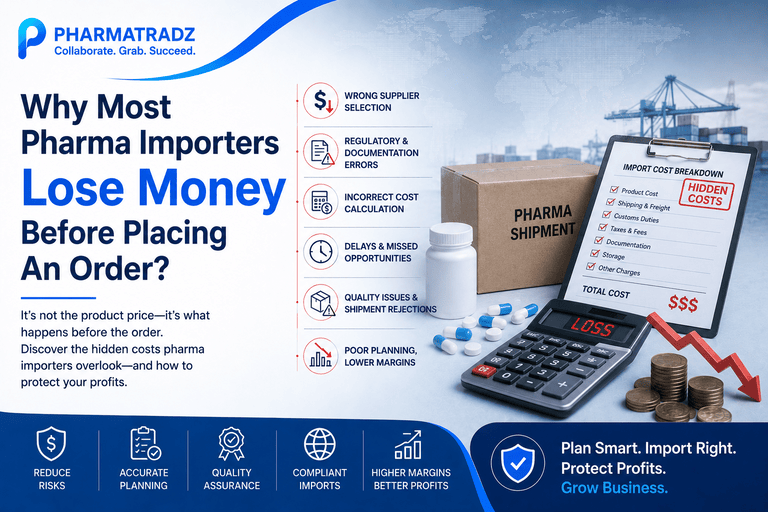
Pharma importers do not always lose money after a shipment arrives. Many lose money before they even place the order.
The loss usually starts when a buyer trusts the wrong supplier, ignores compliance, calculates cost badly, or rushes into a deal because the price looks attractive. A low quote may look profitable on paper, but the real cost can change once freight, documents, duties, testing, storage, delays, and product checks are added.
Before any serious purchase decision, importers should check verified GMP pharma suppliers through a trusted sourcing process and review every document carefully. As per the research done by Pharmatradz Global Ventures Pvt Ltd, many early import losses happen because buyers focus on product price first and supplier verification later.
This blog explains where early losses happen and how importers can avoid costly mistakes before making a purchase.
Key Takeaways
- Many pharma import losses begin before the first order is placed.
- A cheap supplier can become expensive if the quality or documents are weak.
- Compliance must be checked before price negotiation goes too far.
- The landed cost is more important than the product price alone.
- Sample checks can prevent bulk-order mistakes.
- A pharma marketplace is useful only when buyers still follow a proper verification process.
Why Pharma Importing Costs More Than Buyers Expect
A supplier quote is not the final cost. It is only the starting point.
A buyer may receive a good price for tablets, capsules, injectables, APIs, nutraceuticals, or medical products. At first, the margin may look strong. Then other costs begin to appear.
There may be charges for freight, insurance, customs duty, taxes, bank transfers, product testing, registration, warehouse storage, cold-chain handling, and local delivery. If the product requires special temperature control, the cost can increase further.
This is why importers should never judge a deal only by the supplier’s price. They should calculate the full landed cost before making a decision.
Why Supplier Verification Matters First
In pharma, the supplier matters as much as the product.
A buyer may find several suppliers offering the same product. The cheapest one may not be the safest one. Some suppliers may have weak documentation. Some may not have the right export experience. Some may not understand the buyer’s country's rules.
GMP matters because it focuses on consistent production and quality control. WHO explains that GMP covers production, testing, documentation, premises, personnel, materials, and quality systems for pharmaceutical products.
Before placing an order, importers should check:
- Company registration
- GMP certificate
- Product license
- Export history
- Certificate of Analysis
- Batch records
- Product stability data
- Shelf life
- Packaging details
- Regulatory documents
A pharma marketplace can help buyers find suppliers faster. It should not replace proper checking.
Mistake 1: Choosing The Lowest Price Too Quickly
A low price can be useful, but only when the supplier is reliable.
If the price is much lower than the market, the buyer should slow down. There may be a reason behind it. The product may have a short shelf life. The supplier may exclude key documents. The packaging may not meet import rules. The product may need extra testing. Delivery may take longer than promised.
A cheap product becomes costly when it causes delays, rejection, relabelling, poor market response, or quality complaints.
Good pharma importing starts with one simple question:
Is this deal safe after all costs and risks are counted?
Mistake 2: Ignoring Country-Specific Compliance
Every country has its own pharma import rules. A product accepted in one market may not be accepted in another.
Some products need registration before import. Some need special labels. Some need extra documents. Some require proof of manufacturing quality, stability, safety, or batch testing.
The FDA explains that current good manufacturing practice rules set minimum requirements for methods, facilities, and controls used in drug manufacturing, processing, and packing. These rules help ensure that medicines have the identity, strength, quality, and purity they claim.
Importers lose money when they check compliance after the order has been placed. By then, they may have already paid advance money, booked freight, or committed to a supplier.
Compliance should be checked before the deal moves forward.
Mistake 3: Not Calculating The Full Landed Cost
Many importers calculate only two things: product price and shipping cost.
That is not enough.
A proper cost sheet should include:
- Supplier price
- Freight
- Insurance
- Import duty
- Local taxes
- Customs broker fees
- Bank charges
- Testing costs
- Registration costs
- Warehouse charges
- Cold-chain cost, if needed
- Local transport
- Delay buffer
- Currency fluctuation
This is where many buyers lose profit before ordering. The deal looks profitable at the quote stage, but the real cost becomes clear later.
A serious importer should prepare the landed cost before negotiating the final order.
Mistake 4: Skipping Samples And Product Checks
Samples are not a formality. They are protection.
Before a bulk order, the buyer should check the product, packaging, label, shelf life, storage conditions, and documents. If testing is needed, it should happen before a large payment is made.
Sample review helps catch problems such as:
- Wrong strength
- Weak packaging
- Short expiry
- Label mistakes
- Missing batch details
- Poor product finish
- Storage mismatch
A buyer using an online pharma trading platform may find products faster, but the product still needs a real-world quality check before bulk purchase.
Mistake 5: Buying More Stock Than The Market Can Sell
A good product can still create a loss if the buyer imports too much.
Pharma products have expiry dates. Some need special storage. Some move slowly in the market. Some face sudden price changes. Some lose demand when competitors launch cheaper options.
Before ordering, buyers should check:
- Monthly demand
- Current market price
- Competition
- Shelf life
- Storage cost
- Distributor interest
- Doctor or retailer acceptance
- Repeat demand
Overstocking is not only a storage problem. It blocks cash. It increases expiry risk. It also reduces the buyer’s ability to invest in better-moving products.
Mistake 6: Accepting Unclear Terms
A pharma order should not depend on casual messages.
The buyer and supplier should clearly agree on product specifications, price, payment terms, documents, shipment date, packaging, shelf life, inspection, and the responsibility in the event of any issues.
Unclear terms can lead to disputes. A supplier may say the buyer misunderstood the offer. A buyer may expect documents that were never included. The shipment may be delayed because no clear timeline was written.
Before placing an order, confirm:
- Minimum order quantity
- Final price
- Payment schedule
- Delivery timeline
- Required documents
- Batch size
- Shelf-life guarantee
- Packaging rules
- Replacement terms
- Delay responsibility
This step protects both sides.
Red Flags Pharma Importers Should Not Ignore
Some warning signs are easy to spot if the buyer is paying attention.
Be careful if:
- The supplier avoids document requests
- The price is far below the normal market range
- The company details are unclear
- The product information keeps changing
- The supplier pushes for fast payment
- The GMP certificate cannot be verified
- Communication is slow or confusing
- The supplier cannot explain traceability
- The payment terms feel risky
A good pharma marketplace can make discovery easier, but the buyer must still check the facts.
Pre-Order Checklist For Pharma Importers
Use this checklist before placing a pharma order.
Supplier Check
- Confirm company registration.
- Review GMP and product documents.
- Ask about export experience.
- Check product history.
- Review communication quality.
Product Check
- Request samples.
- Check shelf life.
- Review packaging and label.
- Confirm storage needs.
- Test the product when required.
Compliance Check
- Confirm import rules in your country.
- Check registration needs.
- Review document requirements.
- Confirm label language and format.
Cost Check
- Calculate full landed cost.
- Add taxes, freight, testing, and storage.
- Include currency and delay risk.
- Compare the margin after all costs.
This checklist can help importers use a pharma marketplace with better control and less guesswork.
How Smart Importers Protect Profit Before Ordering
Smart importers do not rush into a deal just because a product looks profitable.
They compare suppliers. They check documents. They test samples. They calculate the real cost. They confirm demand. They start small when the product is new. They keep records of every agreement.
A global network of B2B pharma platforms can help buyers find more options, but profits are protected through careful decision-making.
In the middle of this process, Pharma Tradz can help buyers explore pharma listings, supplier connections, product opportunities, consultants, and business proposals through one platform.
The real value comes when buyers use the platform with discipline.
Conclusion
Most pharma importers do not lose money on product imports. They lose money because they move too quickly before fully assessing the picture.
A safe order starts before the purchase order is created. The buyer must verify the supplier, inspect the product, review the documents, calculate the landed cost, and understand market demand.
As per research conducted by Pharmatradz Global Ventures Pvt Ltd, safer pharma sourcing starts with verified suppliers, clear documentation, accurate cost planning, and careful review of business opportunities before placing an import order.
Frequently Asked Questions(FAQs)
FAQs About Pharma Import Costs And Risks
Why Do Pharma Importers Lose Money Before Ordering?
They lose money because they spend time and money on poor suppliers, weak documents, wrong products, unclear costs, or products with low market demand.
What Hidden Costs Should Pharma Importers Expect?
Importers should expect freight, insurance, customs duty, taxes, broker fees, testing costs, registration charges, storage costs, bank fees, and local delivery costs.
How Can Importers Verify Pharmaceutical Suppliers?
They can check company registration, GMP certificates, product licenses, batch documents, export history, references, and communication quality.
Is A Pharma Marketplace Useful For Importers?
Yes. A pharma marketplace can help buyers find suppliers, products, and business opportunities faster. The buyer should still verify every detail before placing an order.
What Should Be Checked Before Placing A Pharma Order?
Check supplier documents, product quality, compliance rules, landed cost, shelf life, payment terms, shipment timeline, and market demand