Joining a partnership in the pharmaceutical market can lead to new markets, broader distribution and accelerated growth. But before signing any agreement, it is important to clearly understand what pharma co-marketing is and how it affects your business responsibilities and risks. Most deals may seem to be good initially, but details of a contract can pose severe problems in the future.
A properly written pharma co-marketing contract specifies the relationship between two companies in marketing and selling products and share responsibilities and profits. After a few initial discussions, many businesses turn to platforms like Pharma Tradz to explore partners and better understand how such agreements work across different markets.
As per the research done by the Pharmatradz Global Ventures Pvt Ltd, a large number of disputes in pharma partnerships are linked to unclear contract clauses rather than product or pricing issues.
Key Takeaways
- Co-marketing agreements can create growth opportunities, but also carry hidden risks
- Legal clauses directly affect revenue, control, and responsibilities
- Most disputes happen due to unclear or incomplete agreements
- Reviewing key clauses before signing can prevent long-term issues
- A structured contract review helps businesses avoid costly mistakes
What Is a Pharma Co-Marketing Agreement?
A pharma co-marketing agreement is a partnership where two companies partner to promote and distribute a product in a specified market. The product may be owned by one company and be supported on marketing, sales or distribution by the other company.
These agreements are typical whereby companies desire to extend their reach without necessarily establishing full operations in a new region. However, the success of such partnerships depends heavily on how clearly responsibilities are defined in the contract.
Why Co-Marketing Deals Often Go Wrong
Even well-planned partnerships may be problematic when the expectations are not properly written down.
- Lack of clarity of roles between partners.
- Arguments on how to share revenues.
- Overlapping territories.
- Lack of defined responsibilities.
- Poor communication after signing.
Such issues usually occur due to the absence of or insufficient description of key clauses.
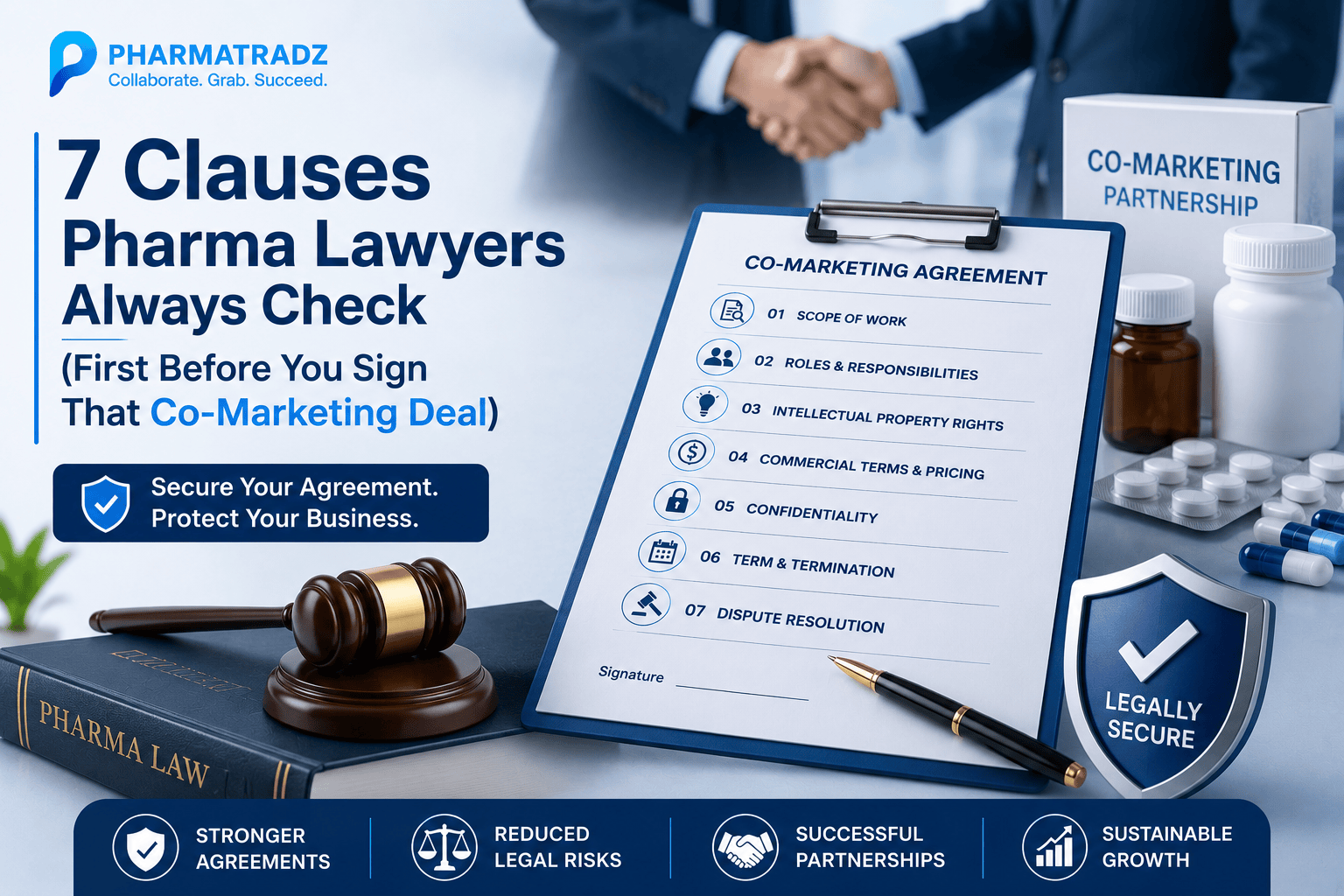
The 7 Clauses Pharma Lawyers Always Review
Understanding these clauses can help avoid confusion and protect your business interests.
1. Territory Rights
This is where each partner can sell or market the product. If not clearly defined, it can lead to conflicts and competition between partners.
2. Revenue Sharing Terms
This provision is intended to describe the distribution of profits. It must specify percentages, deductions, and payment periods.
3. Branding and Product ownership
It is important to know who owns the product, brand name, and packaging. This influences the long-term control and positioning on the market.
4. Minimum Sales Commitments
Some agreements include sales targets. In case they are not fulfilled, fines or a cancellation of the contract can be considered.
5. Regulatory Responsibilities
In this section, the approval, documentation and compliance are defined. Any loophole in this aspect may postpone the release of products.
6. Termination Clause
This is why either of the two can terminate the contract. It must contain the notice terms and financial terms.
7. Dispute Resolution
This provision stipulates the resolution of conflicts, such as the jurisdiction and the legal process.
Common Red Flags Before Signing a Pharma Agreement
There are some red flags that cannot be overlooked when analyzing a contract.
- Vague or unclear wording in key sections
- Lack of information regarding revenues or responsibilities.
- One-sided terms that favour one partner.
- No clear exit conditions
- Lack of a dispute resolution framework
Early detection and identification of these issues can help prevent significant problems in the future.
How to Review a Co-Marketing Agreement Smartly
Risk mitigation and clarity enhancement can be achieved through a thorough review process.
- Read all the clauses, not only the summary.
- Check financial conditions carefully.
- Request explanation on ambiguous areas.
- Ensure responsibilities are equally defined
- Seek legal advice where necessary.
Knowing the difference between co-marketing vs co-promotion in pharma can also be useful in considering whether the arrangement aligns with your business model.
How to Evaluate a Co-Marketing Partner Before Signing the Agreement
Even a well-written contract cannot fully protect your business if the partner itself is not reliable. Most problems of co-marketing transactions begin not during the agreement, but the selection of the wrong partner.
Before finalising any deal, it is important to assess the partner beyond paperwork:
- Look into their reputation in the market and their previous partnering.
- Check their distribution power within the target area.
- Know their selling and marketing potential.
- Assess their capability of fulfilling regulatory requirements.
- Make sure that they are consistent in the supply and delivery of products.
For example, if you are entering a co-marketing deal in a specific therapeutic segment - such as working with antifungal drug manufacturers - confirming their existing market presence and regulatory standing in that category is essential before finalising any agreement.
A good partner, having clear capabilities, could minimize the risks that even a detailed contract could not exclude totally. Taking time to evaluate both the agreement and the partner ensures better alignment and smoother execution.
Quick Checklist Before You Sign Any Pharma Deal
|
Area |
What to Check |
|
Territory |
Well defined areas |
|
Income |
Fixed percentages and schedules |
|
Compliance |
Assigned responsibilities |
|
Exit Terms |
Clear termination conditions |
|
Legal |
Defined dispute resolution |
How Digital Platforms Help Reduce Contract Risks
Digital platforms are making it easier for businesses to evaluate partnerships before signing agreements. They can provide access to legit companies to compare the options and learn how deals are organized.
Pharma Tradz is one such platform that helps businesses explore potential partners and review key details before entering into agreements. This improves visibility and reduces the chances of entering unclear partnerships.
Key Factors to Consider Beyond Legal Clauses
Important are the contracts, yet the long run success lies not only in the legal terms.
- Stability in product supply.
- Transparency in communication.
- Capacity to fulfill demand.
- Market understanding of the partner.
- Alignment of business goals.
These factors often play a role in the overall success of a pharmaceutical partnership. If you are also evaluating whether to produce in-house or outsource, understanding the hidden costs of building your own pharma manufacturing line can help you make a more informed decision before committing to any co-marketing structure.
Conclusion
Co-marketing deals may enable companies to grow at a higher rate, but they must be also evaluated thoroughly before signing. Each clause in the contract plays a role in defining responsibilities, revenue, and long-term outcomes.
Understanding these key areas can help reduce risks and avoid disputes that often arise after agreements are finalised. Platforms like Pharma Tradz can support businesses in exploring potential partners and gaining better clarity before entering such deals.
If you are planning to sign a co-marketing agreement, now is the right time to take a smarter step. Explore Pharma Tradz to discover reliable partners, compare opportunities, and move forward with better clarity before you commit. Making the right choice today can help you avoid costly mistakes and build stronger partnerships for the future.
Frequently Asked Questions(FAQs)
1. What is pharma co-marketing?
It is a joint venture where two firms join hands to market and sell a pharmaceutical product in a particular market.
2. What is the difference between co-marketing and co-promotion?
Co-marketing typically entails shared responsibility whereas co-promotion tends to be more concerned with shared promotional efforts.
3. What are the advantages of the contract clauses in pharma deals?
They establish roles, revenue sharing, and legal obligations, it aids in preventing conflicts.
4. Is it possible to change a co-marketing agreement later?
Yes, but it should be accepted by both parties to the changes and formalize the new contract.
5. How is the largest risk in co-marketing deals?
Conflicts can arise when unclear terms are applied concerning revenue, territory, and responsibilities