
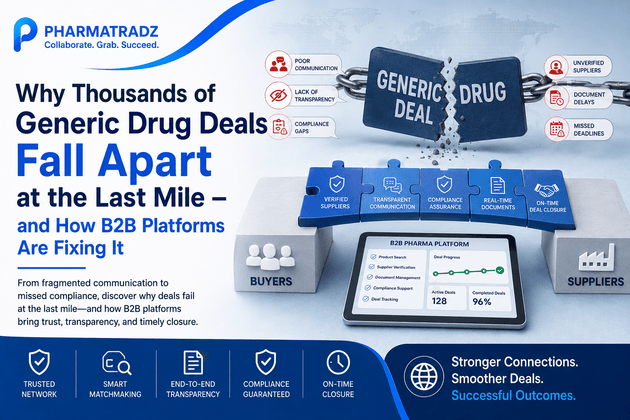
Closing a pharmaceutical deal should be the final step in a long process of negotiation, verification, and planning. Yet, many businesses find that deals fall apart just before completion. These generic drug trade challenges often appear at the final stage, where even small gaps can lead to major setbacks.
In today’s global market, companies are increasingly exploring digital solutions such as a pharma marketplace to reduce uncertainty and improve coordination between buyers and suppliers. Platforms like Pharma Tradz are often used to understand better how deals move from negotiation to execution across borders.
As per the research done by the Pharmatradz Global Ventures Pvt Ltd, a significant number of failed deals are not due to pricing or product issues, but due to breakdowns in communication, compliance, and last-stage execution.
Key Takeaways
- Many pharma deals fail during the final stage, not at negotiation
- Documentation, logistics, and coordination gaps are major reasons
- Last-mile issues can lead to financial and operational losses
- Digital platforms are helping reduce deal risks
- Better planning and visibility can improve deal success rates
What Does “Last Mile” Mean in Generic Drug Deals?
The last mile is a concept used in describing the last stage in a deal before it is final. This involves the verification of documents, shipment arrangement, finalisation of payment, and compliance with regulations.
Although previous phases may have been performed successfully, the final phase of the pharmaceutical supply chain often reveals the final-mile issues that were not evident before. These problems may postpone or even prevent the progress of a deal.
Why Generic Drug Deals Fail at the Last Mile
There are several reasons behind generic drug deal failures, and most of them are linked to execution rather than negotiation.
1. Documentation Gaps
The lack or absence of paperwork may postpone approvals or shipments.
2. Compliance Issues
Non-conformance with the regulatory requirements may halt the deals at the very end.
3. Trust and payment issues
Lack of clear terms of payment or delays may lead to uncertainty between the parties.
4. Logistics Challenges
Delays in shipping, custom difficulties, as well as coordination challenges can impact shipping schedules.
5. Quality Verification Issues
These risks begin much earlier than the last mile - understanding why most international buyers get burned sourcing APIs shows how quality gaps at the ingredient level create verification failures that only surface at the final deal stage.
6. Miscommunication
The fact that buyers and suppliers are not clear can cause misunderstandings.
These factors highlight ongoing pharma supply chain challenges that continue to affect global trade.
The Hidden Cost of Failed Pharma Deals
When a deal collapses, the impact goes beyond immediate financial loss.
- The time spent on negotiations and documentation is lost.
- There is a risk of missing market opportunities.
- Business relationships can be affected
- There are other expenses when it comes to re-initiating the process.
These are some of the wider risks of pharmaceutical trade that companies have to bear when they are trading in the international markets.
Common Warning Signs Before a Deal Falls Apart
There are some indicators that usually come before a deal collapses.
- Slow sharing of documents.
- Changing agreed terms frequently.
- Poor communication.
- Missing a certification or approval.
- Delayed reactions in the last stages.
Early identification of such signs can be used to avoid pharma logistics issues in the process later.
Why Conventional Pharma Trade Models Fail
Older systems tend to be coordinated manually and with a low level of visibility.
- Communication occurs in more than one channel.
- The verification processes do not necessarily become standardized.
- Poor access to quality supplier information.
- Slow tracking of documentation and shipments.
Such constraints have led to the current problems in last-mile pharma deliveries which influences the completion of deals.
How to Track and Manage Deals Before They Reach the Last Mile
Deal failures could be prevented in case businesses check the progress before they get to the last stage. Last-minute review of documentation or confirmation of logistics are likely to cause delays and confusion.
As a precautionary measure, companies ought to strive to proactively manage each phase of the deal in a proactive manner:
- Establish specific dates of documentation and approvals.
- Monitor interaction among all the involved parties.
- Make sure that regulatory requirements are taken into account early in the process.
- Check suppliers credentials prior to concluding deals.
- Planning and logistics of shipment must be planned beforehand.
By keeping up on the deal lifecycle, the businesses can be able to identify the possible issues early enough and take corrective action before they can influence the outcome. This reduces uncertainty and improves the chances of successful deal completion.
How B2B Platforms Are Fixing the Last Mile Problem
Digital platforms are changing how pharma deals are managed. They offer orderly systems that introduce transparency and coordination to a single location.
To understand how modern deal management works in practice, it helps to explore how a P2P pharma trading platform connects verified buyers and sellers directly - eliminating the middleman delays and documentation gaps that cause most last-mile failures in generic drug transactions. These platforms enable businesses to find out verified partners, manage documentation, and track deal progress more effectively.
Pharma Tradz is one such platform that supports businesses in navigating complex transactions and improving visibility across the supply chain.
Benefits of Using B2B Platforms for Pharma Trade
Companies are increasingly turning towards digital solutions due to a number of reasons.
- Increased access to the credibility of suppliers.
- Quickened communication amongst parties.
- Easier document management
- Better coordination in the last stages.
- Availability of international partners.
These advantages highlight the growing importance of B2B pharma marketplace benefits in reducing deal risks.
How to Ensure Your Pharma Deals Don’t Fail
To prevent failure of deals, it is necessary to plan it carefully and pay attention to detail.
- Early supplier and certifications verification.
- Agree on payment terms.
- Arrange all the paper work beforehand.
- Logistics in the plans should be finalised before the final deal is made.
- Maintain consistent communication
Early identification of sourcing problems also minimizes the risks of last-minute upheavals. Businesses that work with a verified generic drug supplier export network reduce last-mile failures significantly - because supplier credentials, certifications, and delivery track records are confirmed well before the final transaction stage.
Conclusion
Many pharma deals do not fail at the negotiation stage but during the final steps, where execution becomes critical. These last-mile challenges often stem from gaps in documentation, coordination, and logistics rather than product or pricing issues.
Digital solutions are helping businesses address these gaps by improving visibility and streamlining processes. Platforms like Pharma Tradz make it easier to explore partners, manage transactions, and reduce uncertainty in global trade.
If you are looking to improve deal success rates, exploring Pharma Tradz could help you better manage the final stages and avoid common pitfalls that delay or disrupt pharma transactions.
Frequently Asked Questions(FAQs)
1. What is the reason why generic drug deals fail on the final stage?
They usually fail because of gaps in documentation, logistic problems, or ineffective communication.
2. What is the final mile of pharma trade?
It is defined as the last stages of a transaction, which involve documentation, payment and delivery.
3. What can be done to minimize deal failures?
Problems can be avoided by better planning, clear communication, and early verification.
4. Can B2B be handy in the pharma trade?
They allow increased visibility and coordination, which have the potential to increase the success rate of deals.
5. Which are the typical dangers in the pharma business?
They are the compliance problems, the logistics delays, and the problems with the verification of the suppliers.