
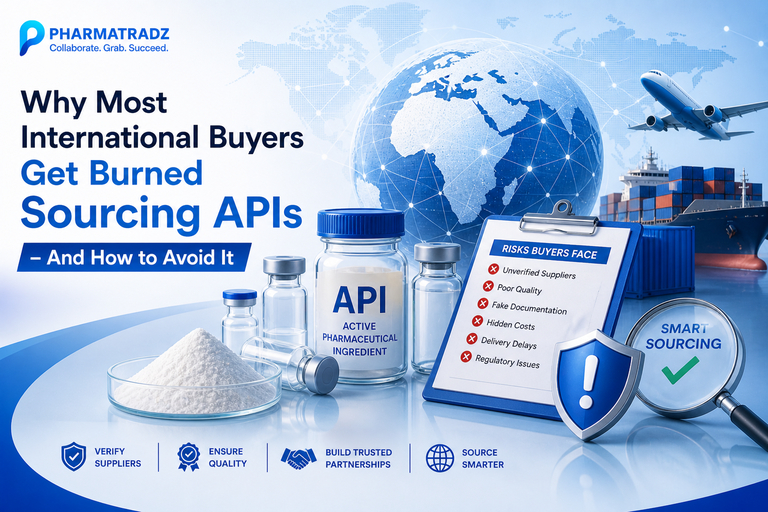
Sourcing pharmaceutical ingredients across borders can open new opportunities, but it also comes with serious risks. Buyers often go to global markets for cost savings, but end up with delays, rejections or quality problems. If you are looking to source pharmaceutical APIs, it is important to know how and where things can go awry.
Many businesses turn to global networks and platforms such as Pharma Tradz to connect with suppliers, yet challenges still exist if the process is not handled carefully. As per the research done by the Pharmatradz Global Ventures Pvt Ltd, a large number of sourcing failures happen due to gaps in verification and documentation rather than pricing alone.
Working with active pharmaceutical ingredient manufacturers across countries requires attention to detail, regulatory awareness, and careful supplier selection.
Key Takeaways
- International API sourcing offers cost and scalability benefits, but carries risks
- Most failures occur due to poor supplier verification and missing documentation
- Compliance, quality checks, and communication are critical for success
- Managing the sourcing process can minimise financial and regulatory risks
- Digital platforms and verified networks can support safer sourcing decisions
What Does Sourcing APIs Internationally Really Involve?
Active Pharmaceutical Ingredients (APIs) are the key ingredients in drugs. Pharmaceutical companies use suppliers from around the world for these ingredients due to:
- Access to low-cost production
- Access to specialised manufacturing capabilities
- Scalability of operations
But international sourcing is more than just supplier identification. It involves regulatory compliance, logistics arrangements, documentation and testing. It's easy to get even a small detail wrong.
Why International Buyers Often Get Burned
Knowing what not to do will help you succeed.
Lack of Proper Supplier Verification
Buyers often rely solely on online listings and don't verify certifications, factories, etc.
Over-Reliance on Price
Cheaper prices might seem like a good deal, but can mask problems like quality or regulatory problems.
Ignoring Regulatory Requirements
Not following regulations (e.g. GMP, country-specific regulations) can lead to rejection.
Poor Documentation Understanding
COA and DMF are sometimes not studied or not studied well.
Communication Gaps
Time zone, language and cultural differences can cause miscommunication.
Hidden Costs
Transportation, customs and storage charges can add up.
Real Risks of Poor API Sourcing
Poor sourcing can result in:
- Fines for the disposal of unusable batches
- Fines for non-compliant ingredients
- Delays in product launches
- Loss of reputation
- Loss of long-term partnerships
These risks highlight why careful planning and verification are essential.
How to Identify Reliable Pharmaceutical API Suppliers
Selecting a supplier is a critical aspect of pharmaceutical API procurement.
- Check for certificates like GMP and approvals
- Ask for sample batches for testing prior to purchase
- Audit or inspect production facilities
- Check export history and customer reviews
- Turn to reputable B2B suppliers
An effective API quality verification process can help eliminate doubt and improve your decision-making.
Step-by-Step Process to Source APIs Safely
If you're looking for certainty about sourcing pharmaceutical APIs, a process can help.
- Identify your API needs (quantity and specifications)
- Identify potential suppliers with certifications and experience
- Conduct background checks and request documentation
- Test samples in certified laboratories
- Assure compliance with standards
- Negotiate and finalise contracts with terms and conditions
- Organise transportation and prepare documentation
- These help to mitigate risks and increase success.
- Don't Forget the Paperwork
- Documentation is a critical part of pharmaceutical sourcing.
Each step plays a role in reducing risk and improving outcomes.
Key Documents You Should Never Ignore
Documentation is a critical part of pharmaceutical sourcing.
|
Document |
Purpose |
|
Certificate of Analysis (COA) |
Confirms quality and composition |
|
Drug Master File (DMF) |
Provides detailed manufacturing data |
|
GMP Certificate |
Ensures compliance with manufacturing standards |
|
Stability Data |
Shows product shelf life and storage conditions |
|
Batch Records |
Tracks production details |
Missing documents or wrong documents can mean rejection of shipment or compliance issues.
Common Red Flags When Working with API Suppliers
The warning signs can help you identify unreliable partners.
- Prices that appear too low
- No verifiable certifications.
- Poorly written or incomplete documentation
- Poor communication or slow communication
- Pressure to make deals quickly
- Catching them early saves time, money, and effort.
Smart Strategies to Avoid Getting Burned
- Work with pre-screened supplier networks
- Not one-off deals but long-term relationships
- Diversify sourcing to prevent reliance on a single supplier
- Use third-party inspection services as required
- Monitor developments in regulatory environments of target markets
Working with a GMP-certified drug ingredient supplier means an additional level of reliability.
How Digital B2B Platforms Are Making API Sourcing Safer
The new platforms are bringing a level of transparency to global sourcing. They can help buyers:
- See verified supplier profiles
- See many options in one location
- Rapidly connect to global partners
- Organized communications to manage risks
Platforms like Pharma Tradz are part of this shift, helping businesses explore safer sourcing opportunities without depending on traditional methods alone.
Conclusion
International API sourcing can deliver strong business benefits, but only if done properly. Most of the sourcing failures occur from the gaps in verification, documentation and supplier selection and not just on pricing. If buyers exercise discipline and understand the red flags, they can reduce risk and improve their outcomes. Pharma Tradz can help you in this journey by connecting you with verified partners, but the onus of due diligence is always on the buyer.
Ready to get control of your sourcing process? Find Pharma Tradz today and connect with trusted global suppliers, access verified opportunities and make safer, smarter API sourcing decisions with confidence.
Frequently Asked Questions(FAQs)
1. What are the biggest risks of outsourcing APIs internationally?
Major risks are bad quality, non-compliance to regulations, delays in delivery and financial losses.
2. How to check your API supplier?
Check certifications, ask for samples, review documentation. If you can, do audits.
3. What is the Importance of GMP Certification?
It makes sure the supplier adheres to the proper manufacturing standards required for pharmaceutical products.
4. What is a Certificate of Analysis?
It is a document that confirms the quality and composition of a specific batch of the API.
5. Do digital platforms help to reduce sourcing risks?
Yes, they allow access to verified suppliers and increase transparency in the sourcing process.