Introduction
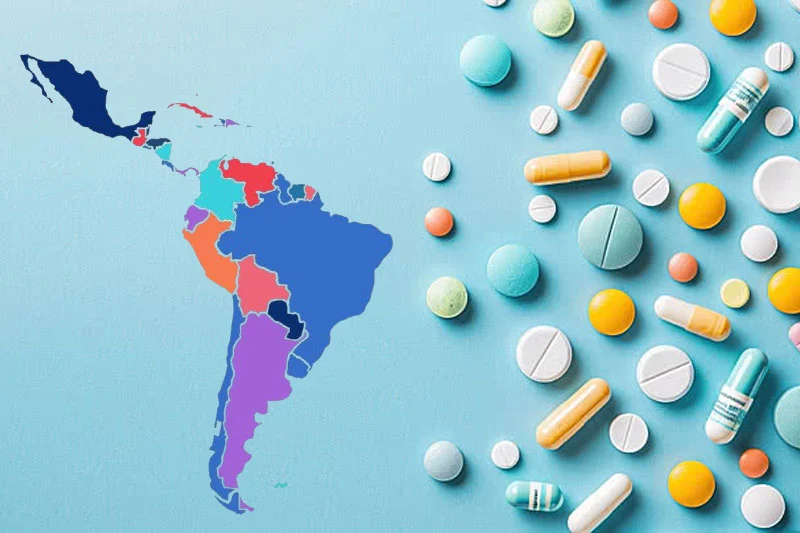
The Latin American pharmaceutical market is an ever-increasing sector that keeps on drawing global investors, pharmaceutical companies, and medical professionals' interest. Latin America has a complex mix of different economies, healthcare systems, and regulatory frameworks which pose a double-edged sword of opportunities and challenges for the pharmaceutical business sector. This article looks into the present scenario of the Latin American pharmaceutical market, the key trends, the reasons for growth, the challenges, and the future of the industry.
Latin America is considered to be one of the most progressive regions in the healthcare and pharmaceuticals areas and thus a great market for the pharmaceutical companies that want to spread their wings outside the traditional markets. The region has an increasing population, escalating healthcare needs, and raising demands for both innovative as well as generic medicines, which, therefore, has made it the center of the drug strategies of the world's pharmaceutical companies. For a broader view of Latin America’s evolving pharma industry, explore our in-depth country reports on the Argentina Pharma Market, Brazil Pharma Market, Mexico Pharma Market, Venezuela Pharma Market.
Table of Contents
- Market Snapshot: Size, Growth & Key Figures
- Key Growth Drivers in the Latin America Pharma Industry
- Key Pharmaceutical Markets in Latin America
- Regulatory Landscape of Latin America
- Investment and Business Opportunities
- Future Insight: The Expectation for 2030 and Beyond
- Conclusion
Market Snapshot: Size, Growth & Key Figures
The Latin America pharmaceutical market achieved revenues of about USD 74.6 billion in 2024. It is anticipated that the figure will have surpassed USD 102 billion by 2030, and the market will have experienced a CAGR of approximately 5.4% during 2025-2030. The value of the market is predicted to keep growing due to the increasing demand for both traditional and advanced therapies.
Currently, the region accounts for around 4.5% of the total revenue in the global pharmaceutical market. Clearly, these figures highlight the reason why Latin America is crucial for the global pharma community of buyers and sellers.
Key Growth Drivers in the Latin America Pharma Industry
The following factors have been identified as driving forces behind the growth of the Latin American pharmaceutical market:
1. High Healthcare Demand
Latin America is going through a very swift demographic transformation. The region is getting older, and more patients are diagnosed with the chronic diseases of diabetes, heart diseases, and cancer. Reports suggest that more than 70% of deaths in Latin America are due to non-communicable diseases (NCDs), which consequently result in a higher need for long-term treatments and specialty medicines.
Growing disease burden directly drives demand for prescription medicines, generics, and advanced therapies.
2. Increasing Government Healthcare Spending
Healthcare spending by the public sector has been gradually increased in most Latin American countries over time. The governments are heavily investing in health programs that aim at providing the population with medicines and at controlling the diseases in the area. For instance:
-
The Brazilian Unified Health System (SUS) guarantees the intake of essential drugs by a large number of people.
-
The three countries, Mexico, Argentina, and Colombia have increased the number of insured patients and adopted price controls as well to ensure that medicines are not too expensive.
These actions not only open up the local markets for the international pharma companies but also increase their sales and patient base.
3. Growth of Generics and Biosimilars
The generics market is one of the great influences in Latin America. By definition, the generic medicines have the same active ingredient as the branded ones and the same therapeutic effects; however, the prices of generic medicines are a fraction of those of branded ones, which is why they are very well suited for the poor consumers and public health programs.
In 2024, generics were one of the main supplies in pharmaceuticals throughout the region, and the trend is going to last. The market for generic drugs alone is expected to grow from approximately USD 39.5 billion in 2024 to USD 69.1 billion by 2033, showing an annual growth rate of about 6.4%.
At the same time, the segment of biosimilars — more advanced forms of biologic drugs — is gaining ground, especially in oncology and rheumatology. It is thus that Latin America becomes a place where companies working with targeted and precision therapies would love to be.
Key Pharmaceutical Markets in Latin America
The Latin American market for pharmaceuticals is very large, and every country has its unique characteristics, and their dynamics. Below are the most important countries in the entire region:
Brazil: The Largest Market in Latin America
Brazil keeps being the largest pharmaceutical market of the whole region and most of the sales are coming from there. The population is over 213 million, which means that Brazil has a very large customer base. The country has a strong health care system and both public (SUS) and private sectors are providing health care services.
Key trends in Brazil are:
- The market for generic drugs is growing continuously and generic drugs are a significant part of the pharmaceutical industry in Brazil.
- More and more attention is given to specialized treatments, especially in oncology and cardiovascular diseases.
- There is a strong government support for public health programs which grant access to essential medicines for the whole population.
Mexico: A Rising Pharmaceutical Hub
Mexico is yet another key country in the Latin American pharmaceutical market. Being the second biggest market in the region, it enjoys a lot due to its geographical position next to the United States as well as the extensive trade agreements (like the USMCA) it shares with them. Consequently, there has been an increase in the cooperation between pharmaceutical companies from Mexico and the U.S.
Key trends in Mexico are:
- There is a steadily increasing demand for both branded and generic medicines.
- Mexico has a strong pharmaceutical manufacturing sector that attracts many international companies to set up their production facilities in the country.
- There is a growing number of patients who are going to get treated for chronic diseases like diabetes and hypertension.
Argentina, Chile, and Colombia
Even though their pharmaceutical markets are not as big as those of Brazil and Mexico, countries such as Argentina, Chile, and Colombia are very important in the Latin American pharmaceutical market. These countries have stable economies compared to some of their neighbors and are seeing rising demand for both prescription and over-the-counter medications.
Key trends are:
- Argentina is particularly concerned with the enhancement of healthcare accessibility, especially for the remote and rural areas of the country.
- Apart from that, Chile is recognized as a regional healthcare center, providing the best medical services for patients as well as a dramatic growth of the pharmaceutical industry.
- Meanwhile, Colombia's pharma market is skyrocketing as a result of increasing healthcare expenditure and government outlay on public health programs.
Regulatory Landscape for Pharmaceuticals in Latin America
The regulatory system in Latin America can be cumbersome because of the intricate and diverse laws among the different countries. For this reason, pharmaceutical companies that operate in multiple countries must comply with local regulations, which will greatly influence the time and cost of drug approval for the specific country.
National Regulatory Agencies
Each country has its own regulatory agency responsible for overseeing drug approvals:
- Brazil: ANVISA (Agência Nacional de Vigilância Sanitária) is responsible for regulating pharmaceuticals, ensuring safety, efficacy, and quality.
- Mexico: COFEPRIS (Comisión Federal para la Protección contra Riesgos Sanitarios) manages the regulation of pharmaceuticals.
- Argentina: ANMAT (Administración Nacional de Medicamentos, Alimentos y Tecnología Médica) oversees the drug approval process.
At times the regulatory agencies in Latin America can resort to collaboration with organizations such as the World Health Organization (WHO) and the International Council for Harmonisation (ICH) to strive towards a common standard based on the best practices worldwide.
Intellectual Property (IP) and Patents
Patent regulations are some of the key factors that define the overall regulatory environment. IP protection measures are increasingly being introduced in Latin American countries, which is very important for pharmaceutical innovations. On the downside, the level of IP rights enforcement varies from one country to another.
Business and Investment Opportunities for Global Buyers
Latin America is the place where numerous opportunities arise for the pharmaceutical firms trying to enter the emerging markets. Some of the most favorable opportunities would consist of:
Contract Manufacturing & Outsourcing
Latin America is expanding its pharmaceutical contract manufacturing (CDMO) and active pharmaceutical ingredient (API) sectors. The CDMO market generated about USD 11 billion in 2024 and is projected to grow at a CAGR of 7% through 2033. API manufacturing is also on the rise, with biotech segments showing fast growth.
For global buyers, outsourcing production or forging partnerships with local CDMOs can reduce costs and improve regional supply chain resilience.
Clinical Research & CRO Services
Pharmaceutical contract research organization (CRO) market stays with that 6.2% CAGR revenue growth forecast from 2025 to 2030, thereby attracting more and more large-scale manufacturers. A good part of the demand is coming from clinical and pre-clinical services, with the inclusion of Latin American populations in global trials for varying data and cost-efficient testing being the main reason.
Packaging & Supply Chain Innovation
Apart from that, the Latin American pharmaceutical packaging market is also seen as an attractive area and is expected to surpass USD 14 billion by 2030 due to the increasing quest for packaging that is not only sustainable but also safe and compliant.
Challenges Still Exist
The opportunity is real, but so are the risks.
Companies entering Latin America must navigate:
- Currency fluctuations
- Pricing controls
- Counterfeit medicine risks
- Uneven infrastructure
Success depends on choosing the right partners, building flexible pricing models, and understanding local market dynamics.
Those who invest time in market knowledge gain a clear advantage.
Future Insight: The Expectation for 2030 and Beyond
The Latin America pharmaceutical market span will keep on increasing gently through the years. The predictions point to:
- The continuous availability of generics that will push the volume further even more.
- More and more practitioners will be interested in biosimilars and biologics, leading to the creation of higher-value opportunities.
- More investments in digital health, telemedicine, and e-pharmacy channels, which are transforming how medicines reach patients.
Public–private partnerships will also play a larger role in expanding access and improving healthcare outcomes.
By 2034, projections indicate that the Latin American market could reach up to USD 170+ billion, reflecting strong long-term growth potential.
Conclusion
The pharmaceutical market in Latin America is a mix of advantages that attracts the attention of the global buyers. Its continuous growth, the raising of healthcare needs, and the adopting of generics and biosimilars along with a robust manufacturing ecosystem are the reasons for it to be included in the pharma global strategy.
On the flip side, the conquering of Latin America will be synonymous with knowing the local market, dealing with the complicated regulations, and creating strong relationships with the local stakeholder. Whether your focus is market penetration, creating new supply chains, doctoring a research partnership, or whatever your focus is, Latin America is a good place with lots of possibilities for pharmaceutical firms who are ready to take advantage of its opportunities. (Also Read: Top Pharma Companies in Latin America for Contract Manufacturing for Advanced Therapies )
References:
https://www.grandviewresearch.com/horizon/outlook/pharmaceutical-market/latin-america
https://www.marketdataforecast.com/market-reports/latin-america-pharmaceutical-market
https://www.marketdataforecast.com/market-reports/latin-america-generic-drugs-market
https://www.grandviewresearch.com/horizon/outlook/pharmaceutical-market/latin-america
https://www.grandviewresearch.com/horizon/outlook/pharmaceutical-cdmo-market/latin-america
https://www.verifiedmarketresearch.com/product/latin-america-pharmaceutical-traceability-market/
https://www.reuters.com/world/americas/latin-america-caribbean-growth-slow-19-2024-says-world-bank-2024-10-09/
Frequently Asked Questions(FAQs)
What is the Latin America pharmaceutical market?
The Latin America pharmaceutical market is a big market that consists of the production, import, export, and sale of medications through Brazil, Mexico, Argentina, Colombia, and Chile. The market includes many categories, such as branded drugs, generics, biosimilars, APIs, and healthcare services.
How big is the pharmaceutical market in Latin America?
The market is valued at over USD 74 billion and continues to grow each year. It is expected to cross USD 100 billion by 2030, due to rising healthcare demand and wider access to medicines.
Which countries dominate the Latin America pharmaceutical market?
Brazil is the largest market, followed by Mexico. Argentina, Colombia, and Chile are also important and fast-growing markets, especially for generics and imported medicines.
Why is Latin America attractive to global pharma buyers?
Latin America is like a sleeping giant that is slowly waking up to the strong demand growth, large patient populations, expanding public healthcare programs, and the rising trend of using generic and biosimilar medicines. It also offers manufacturing and outsourcing opportunities that are economically attractive.
What types of pharmaceutical products are in highest demand?
The leading factor in the demand for medicines is the price of the medication being affordable, and thus, generic medicines are leading the market. Besides, there are chronic diseases, vaccines, oncology drugs, and biosimilars that are in demand in the region.
Are generic drugs widely accepted in Latin America?
Sure. The generic drugs are the most common and are backed by the government healthcare systems. They are a significant cost-cutting and access expansion measure in the healthcare sector.
What are the main regulatory authorities in Latin America?
Major regulatory agencies include ANVISA in Brazil, COFEPRIS in Mexico, ANMAT in Argentina. Each country has its own approval process and compliance requirements.
Is the regulatory process difficult for foreign pharma companies?
The process can be complicated because the regulations vary from country to country; still, there are many agencies that are now operating according to international standards. Moreover, collaboration with local partners or regulatory consultants will facilitate the market entry.
Can foreign companies manufacture pharmaceuticals in Latin America?
Yes. The majority of multinational firms contract Latin America for API production, packaging, and contract manufacturing. Among the countries in Latin America, Mexico and Brazil are the most favored areas for manufacturing.
How does the government procurement influence the market?
The governments running the healthcare systems are the biggest buyers of drugs. The public tenders and bulk procurement programs not only create large and stable demand for affordable pharmaceutical products but also make the demand constant.
Is there demand for biosimilars in Latin America?
Yes. Demand for biosimilars is growing fast, especially in oncology and autoimmune treatments. Governments support biosimilars to reduce healthcare spending.
How important is digital health in the region?
Digital health is expanding rapidly. E-pharmacies, telemedicine, and digital prescriptions are improving access to medicines and reshaping distribution channels.
What challenges should pharma companies consider?
Key challenges include currency volatility, pricing regulations, counterfeit medicines, and uneven infrastructure. Careful partner selection and local market knowledge help reduce risks.
Is Latin America suitable for long-term pharma investment?
Yes. The market shows steady growth, strong fundamentals, and rising healthcare demand. It is considered a strategic region for long-term expansion and diversification.
How can global buyers enter the Latin America pharmaceutical market?
Buyers can enter through local distributors, joint ventures, contract manufacturing, licensing agreements, or direct exports. Choosing the right entry model depends on product type and target country.